Change in Design Techniques Throughout History
Throughout history, a range of different materials have been used to create large constructions around the world. Only some of the ancient structures are still standing in ruin form, but we can still learn a lot from their techniques. With construction progressing year on year, materials are more stable and durable than ever before.
Mud – 10,200BC
Back in Neolithic times, mud was placed into moulds to create bricks. These bricks were used to make houses and other areas of shelter. Nowadays we see the flaws of using this material in construction, but thousands of years ago when tools were not readily available, mud did a pretty good job in the circumstances.
Stone – 3150 BC
Ancient Egypt has given us fascinating structures, such as the Pyramids, and they were the first people to start using stone for large buildings. This material was only used for the grandest of constructions, such as the pyramids which are still standing today.
Timber – 600AD
First used by the Romans, timber is still used heavily throughout the world for multiple types of small construction projects due to its many benefits. It can be erected quickly and is widely available, but this is now also true for many materials so may not always be the best option.
Iron – 18th Century
During the 18th Century, architects and engineers developed many new ideas and techniques when it came to construction. Buildings were able to be built bigger than ever before thanks to the use of iron columns.
Steel – 19th Century to Present
The industrial revolution saw the world’s buildings grow at a very fast rate. Steel began to be mass-produced and so the world we now see was born. Over the past two centuries there have been advances in steel, and now the material is one of the most popular for building structures such as warehouses and other larger-framed projects. It has a huge range of beneficial properties such as fire-resistance and being able to cope when pressure is applied.
For I beams and other RSJ’s in Cheltenham and the surrounding areas, call Process Steels on 01215 265 757 or visit our contact page to send us an email.
RSJ BEAMS LOUGHBOROUGH
Process Steels are the leading provider of RSJ Beams in Loughborough and have a rich heritage in the steel beam industry. From our 12,000 sq foot warehouse in the West Midlands, we serve customers throughout Loughborough with quality steel products for a variety of building projects, mainly working with the building and construction industry.
With a large supply of steel materials in stock at any given time, we can deliver essential items to a site to suit your time and budget, working with all sized contractors, and supplying large or small orders as per your individual requirements. If you need an RSJ beam delivering and are working to tight timescales, we make sure it’s on site, on time, so there are no delays to your project.
We’re the steel beam specialists
Here at Process Steels, we are proud of our position as a specialist supplier of RSJ beams and also have a range of other high-quality steelwork to offer you. No matter what type of project you are working on, if this requires any type of steelwork, we can supply the following options and so much more:
- RSJ beams
- I Beams
- Steel Staircases
- Fences
- Gates and balustrades
Whether you need steel delivering and installing on-site, or you would like a quote for I beams in Loughborough for structural steel projects, we always deliver a friendly, reliable service and have extremely helpful staff ready to assist you any way they can.
Ask about our high-quality RSJ beams in Loughborough
We can supply steel throughout Loughborough here at Process Steels, and have I beams available in Birmingham, Wolverhampton and throughout the whole of the West Midlands. As one of the largest stockists of steel, no order is too big or small, and when you deal with us, you work with extremely professional and highly trained people that can answer any query you might have.
Find out more and get in touch with the team here at Process Steels to discuss your steelwork requirements. We welcome enquiries from any customer and you can contact us here today or call us for a free quote on 01215265757.
C.E. MARKING NEWS UPDATE
As part of our commitment to providing quality services to our customers, we have introduced a factory production control system into our operations allowing full traceability of product through our manufacturing process to meet the requirements of BS EN 1090 Execution class 2. Accreditation to BS EN 1090-1 will be completed and achieved within the next few months.
Renting vs. Building a Warehouse
A warehouse is a must when it comes to storing business goods, products and equipment, with you generally having the option of either renting or building your own warehouse to meet your needs. With this in mind, it is important for you to be fully aware of the advantages and disadvantages of both options, so we at Process Steels have done the homework for you and devised a list of pros and cons of renting and building a warehouse.
Advantages of Renting
• Renting is suitable when you are looking for a transitional place to store your inventory. This way, you will be able to meet your temporary storage needs for the specific amount of time you require.
• If you are not a limited budget, renting a warehouse is a good option. Most storage companies charge on a monthly basis, but there are others that offer a discount if you opt to rent for a 3 or 6 month period. This option is suitable for businesses that have recurring or seasonal storage needs.
Disadvantages of Renting
• Renting is not the best option in the long run as it can be cost prohibitive and increase your operational costs.
• There may always be the question over the security of a warehouse that you have no control over, which could result in you spending more money to protect your property and give you the required peace of mind.
Advantages of Building
• Building your own warehouse is an investment as you will hopefully be able to make a profit if and when you decide to sell it.
• You will be in control of the warehouse, as it will be your own property. You will be able to access it any time of the day or night, and cater it to the needs of your business.
• You can make changes to the floor plan or structure as you see fit. This is something that you will benefit from when your business grows and you need a more organised warehouse.
• The warehouse can be constructed to precisely meet the needs of your business, ensuring a tailored solution that works for you.
Disadvantages of Building
• As a warehouse owner, it will be your responsibility to tackle security, maintenance and provide adequate ventilation, heating and/or air conditioning.
• If you decide to relocate your business, you may have to sell your warehouse and build or find one in another location.
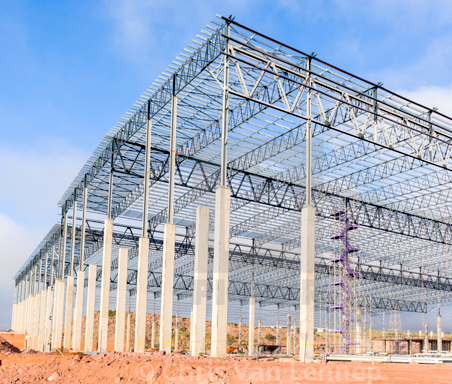
It goes without saying that building a warehouse is more beneficial than renting one in the long term. We at Process Steels are the perfect choice for building warehouses of all shapes and sizes, as we bring along a wealth of experience, knowledge and expertise to the table that you can utilise and benefit from. We can design the ideal warehouse for your business needs and also manufacture and erect it for you. If you are therefore looking to build your own warehouse, contact us today and we will be happy to discuss a build based around your budget and business needs.
HOW STEEL IS PRODUCED
Steel is a ferrous metal which is defined as a metal that comes from, or contains iron. It has a number of uses from construction to kitchen appliances and is now one of the most used metals in the world. At Process Steels we supply RSJ beams throughout the West Midlands area and make sure that all of our products are manufactured to the highest of standards with top quality materials.
The first stage of producing steel is to mine iron ore from the ground. Much of this is extracted from China, Australia and Brazil, however there are many other places that it can be found. Iron is no longer mined throughout the United Kingdom in large quantities as the ore found in many other places is of a higher quality.
Smelting then takes place, which is the process of extracting metal from its ore. Any impurities are removed at the same time, giving a high quality product. This often features large machinery and can be both a dirty and dangerous job. Temperatures are above 1000 degrees Celsius, as the melting point of iron ore is extremely high.
Carbon is then added as this strengthens the metal to make steel as it fills the gaps between the crystals, allowing these not to slip. An average of around 1% carbon is present within most steel products.
The steel is then cast into slabs or ingots and distributed for use wherever needed. For RSJ beams to be supplied for your construction project, contact us on 0121 526 5757 or send us an email via our contact page.
RSJ BEAMS: EVERYTHING YOU NEED TO KNOW
Here at Process Steels, we supply a number of RSJ (rolled steel joist) beams, suitable for various construction projects across Birmingham and the rest of the UK. In fact, as the number one supplier in the Midlands, we’d consider ourselves experts in these beams.
Support beams are absolutely essential for a building’s stability, and it is crucial that construction workers ensure that they purchase high-quality beams from a leading supplier like ourselves, in order to ensure a building’s structural safety. These materials may seem like a small part of an overall build but they have a big responsibility; to support and hold together the entire building.
Our beams come in a variety of shapes and sizes dependent on their position in the build’s ceilings, walls or floors. It’s imperative when purchasing beams that you select the right one for the job – here’s a brief round up of our main two types.
I BEAMS & COLUMNS
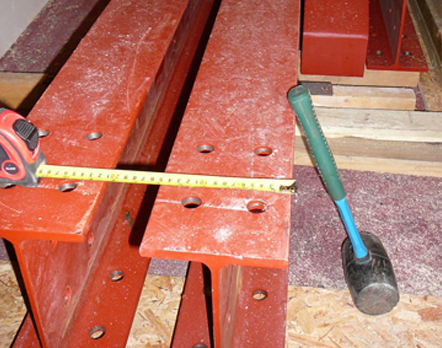
I beams and I columns are easily recognisable by their distinctive ‘I’ shape, which could also be viewed as a ‘H’ when stood on it’s side. The I beam is designed to be placed horizontally, so it’s ideal for loft or ceiling beams. We stock I beams varying in size, from 127mm to 915mm in length. The columns are similar in appearance but chunkier, making them suitable for placing vertically. This means that they are more appropriate for supporting ceilings.
PARALLEL FLANGE CHANNEL
With a distinguishable ‘C’ shape, these are sometimes known as C Beams. They are particularly useful if you have a need to slot them into place or join them with other building materials due to their C-like shape, and can be used in a similar way to I beams.
If you’re looking for an I beam in Coventry or Tamworth, make Process Steels your first port of call. We’d be happy to discuss the different shapes, styles and sizes with you in more details, and we can even fabricate and modify your beams and joists to meet your individual requirements. For more information, call 0121 526 5757 or contact us online.
BENEFITS OF STEEL VS OTHER MATERIALS
Over the past couple of centuries, steel has become one of the most popular materials when building throughout the world due to it’s many excellent properties. However, you may often wonder if cheaper materials or ones which are even more readily available are better for use within your construction project. Here at Process Steels we are experts in the production and erection of steel structures and are believers that this is the best option for a variety of projects.
CAST IRON
This material was originally one of the most popular when it came to the construction industry. This is due to it’s high resistance to impact which is a key factor when building a structure. It is also resistant against twisting or morphing due to a change in temperature which can often happen in this country. However, over time the material can suffer and historically many cast iron bridges collapsed with some ending in catastrophic circumstances. Therefore, these structures were reinforced with steel to give them stability.
WOOD
A chosen material for many houses particularly in the United States of America, wood is a great material for a quick fix. It is extremely accessible and you can order a flat pack house within barely any time at all. However, there are the obvious risks that come along with timber structures including a substantial fire hazard and also during high winds they are susceptible to a large amount of damage.
BRICK
The majority of homes throughout the United Kingdom are built from brick and it has become an extremely popular choice for housing. However, for construction purposes, using brick is extremely long winded and can take a lengthy period to lay. This costs a large amount in manual labour and can this can therefore be extremely impractical.
STEEL
The quick erection of steel is one of the advantages of using the material for construction. It is also extremely reliable as it does not corrode and will last for many years to come. It is therefore a sound investment and one that we at Process Steels can help you get started.
We have a range of steel products available including H, C and I beams for Cheltenham and the surrounding areas. To get in touch with us give us a call on 01215 265 757 or visit our contact page.
HEALTH AND SAFETY REGULATIONS OF WAREHOUSES
Alongside the usual electrical, fire, noise and handling regulations that concern most working environments, warehouses present a variety of additional concerns due to the use of machinery and workplace transport in what can be a confined space.
Employers have a responsibility to carry out full risk assessments according to the 5 steps identified on the Health and Safety Executive (HSE) website. Risk assessments will take into account such factors as trip hazards, possibly harmful substances, the need for personal safety equipment and the potential risks of working at height.
Roger Bibbings, an advisor at the Royal Society for the Prevention of Accidents, says that ‘risk assessments are a process of continual improvement, and a site survey can highlight potential hazards you might otherwise miss.’
The Health and Safety Executive
A report released by the HSE shows that almost half of all work related injuries that occur in warehouses result from manual handling, with a further third resulting from collision with moving, falling and stationary objects. The HSE publishes several guides to warehousing and storage safety on their website, as well as advice on risk assessment and a convenient and easy to use ‘toolbox’ that contains information on all aspects of health and safety.
Health and Safety Checklist
Maintenance of warehouse equipment, proper use of equipment and, of course, a well constructed warehouse all contribute to health and safety good practice.
A checklist will include:
Behaviour: workplace training, good management and responsible staff will minimise the risk of negligent or reckless behaviour causing accidents. Employees should be aware of regulations and the code of conduct that they should abide by.
Vehicle Operation: use of workplace transport requires specific pathways and access points to be clear of obstructions. The need for complicated manoeuvres should be reduced, and employees should maintain an awareness of the routes and frequency of traffic.
Maintenance and Use of Equipment: many accidents occur from improper use of equipment and from faulty equipment that need.
When it comes to building your warehouse, talk to us here at Process Steels as we can provide you with RSJs to build your project. Call us today on 01215 265 757 or visit our contact page.